YouTube
28-When Faith Meets Chemistry
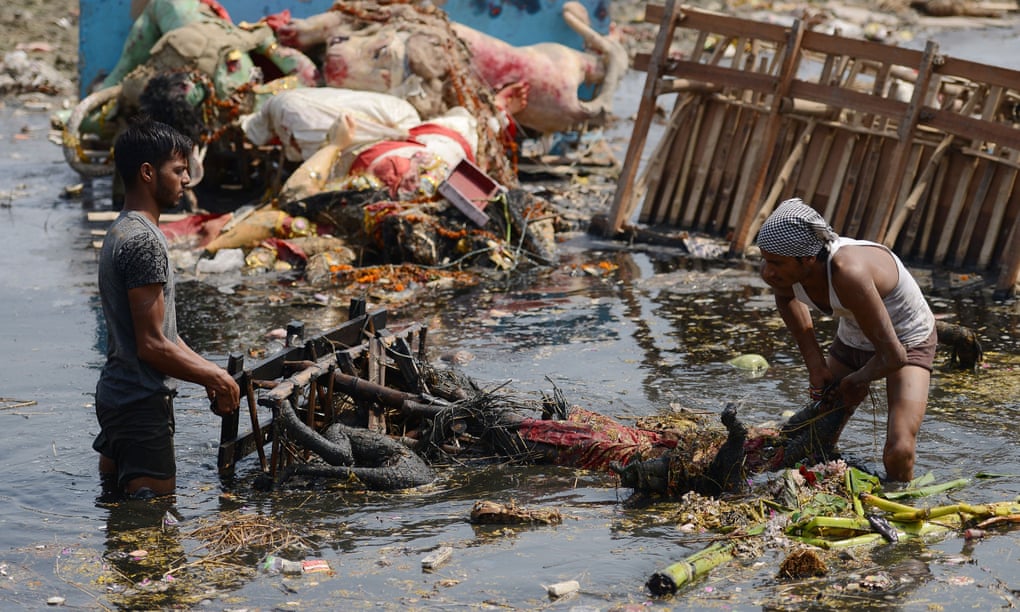
Good morning friends. Today’s story is not comfortable, but it is necessary. It is about something we do with devotion — and what it quietly does to our rivers. Across India, millions of people offer flowers, idols, incense, coconuts, and ashes into rivers every day. During major festivals, the numbers increase dramatically. After Ganesh Chaturthi or Durga Puja, thousands of idols are immersed in a single city within hours. On Chhath, Kumbh, and other river-based rituals, the scale becomes national. Let us begin with organic offerings — flowers, leaves, garlands. When small in quantity, they naturally decompose. But in large volumes, decomposition increases Biological Oxygen Demand (BOD). According to Central Pollution Control Board (CPCB) monitoring, high BOD levels reduce dissolved oxygen in water. When dissolved oxygen falls below 5 mg/L, aquatic life begins to suffer. Fish mortality events have been recorded near major immersion points during peak festival periods. Now consider idols. Traditionally made of clay, many modern idols are produced from Plaster of Paris. Plaster of Paris does not dissolve easily and increases sediment load in rivers. More critically, synthetic paints often contain heavy metals such as lead, chromium, cadmium, and mercury. Studies conducted near immersion sites in multiple Indian cities have shown spikes in heavy metal concentrations after festivals. These metals accumulate in sediments and can enter aquatic food chains. Next is plastic. Offerings today are frequently wrapped in plastic bags, laminated paper, thermocol decorations, and synthetic fabrics. Plastic waste blocks drainage channels, disrupts natural river flow, and breaks down into microplastics. Research globally confirms that microplastics are now found in freshwater organisms and even in human drinking water. There is also the combined impact. In many urban areas, untreated sewage already enters rivers. National assessments have reported high coliform bacteria levels in major river stretches. When ritual waste is added to already stressed systems, the cumulative burden increases rapidly. The river’s natural self-purification capacity — dependent on sunlight, flow speed, and microbial balance — becomes overwhelmed. None of this questions devotion. The intention behind every offering is sacred. But rivers respond not to intention — they respond to material, chemistry, and volume. In earlier centuries, offerings were biodegradable, populations were smaller, and rivers carried far greater dilution capacity. Today, urban density and industrial materials have changed the equation. The river accepts everything we give. But science shows that acceptance has limits. And perhaps that is the quiet reality we must sit with this morning.
जब आस्था मिलती है रसायन से सुप्रभात दोस्तों। आज की कहानी थोड़ी असहज है, लेकिन आवश्यक है। यह हमारी भक्ति और हमारी नदियों के बीच की उस सच्चाई की बात है, जो अक्सर दिखाई नहीं देती। भारत में प्रतिदिन लाखों लोग नदियों में फूल, माला, नारियल, राख और मूर्तियाँ अर्पित करते हैं। बड़े त्योहारों के समय यह संख्या अचानक बढ़ जाती है। गणेश उत्सव या दुर्गा पूजा के बाद एक ही शहर में हजारों मूर्तियाँ कुछ घंटों में नदी में प्रवाहित की जाती हैं। छठ, कुंभ और अन्य पर्वों में यह स्तर राष्ट्रीय हो जाता है। पहले बात करते हैं फूलों और जैविक सामग्री की। कम मात्रा में ये प्राकृतिक रूप से सड़कर मिट्टी में मिल जाते हैं। लेकिन बड़ी मात्रा में इनके विघटन से जैविक ऑक्सीजन मांग (Biological Oxygen Demand – BOD) बढ़ती है। केंद्रीय प्रदूषण नियंत्रण बोर्ड (CPCB) के अनुसार, उच्च BOD स्तर पानी में घुली ऑक्सीजन को कम कर देता है। जब घुली ऑक्सीजन 5 mg/L से नीचे जाती है, तो जलीय जीवों पर असर पड़ने लगता है। कई शहरों में प्रमुख विसर्जन स्थलों के पास मछलियों की मृत्यु की घटनाएँ दर्ज हुई हैं। अब बात मूर्तियों की। परंपरागत रूप से मिट्टी की मूर्तियाँ बनती थीं, लेकिन आज कई मूर्तियाँ प्लास्टर ऑफ पेरिस से बनती हैं। यह आसानी से घुलता नहीं और नदी तल में जमाव बढ़ाता है। इससे भी अधिक चिंताजनक है कृत्रिम रंगों में प्रयुक्त भारी धातुएँ — जैसे सीसा (lead), क्रोमियम, कैडमियम और पारा। विभिन्न शहरों में किए गए अध्ययनों में त्योहारों के बाद इन धातुओं की मात्रा में वृद्धि पाई गई है। ये धातुएँ तलछट में जमा होकर खाद्य श्रृंखला में प्रवेश कर सकती हैं। इसके बाद आता है प्लास्टिक। आजकल अर्पण सामग्री प्लास्टिक बैग, थर्माकोल सजावट और सिंथेटिक कपड़ों में लिपटी होती है। प्लास्टिक नदी के प्रवाह को बाधित करता है और टूटकर सूक्ष्म प्लास्टिक कणों में बदल जाता है। वैश्विक शोध बताते हैं कि माइक्रोप्लास्टिक अब मीठे पानी के जीवों और यहाँ तक कि पेयजल स्रोतों में भी पाए जा रहे हैं। कई शहरी क्षेत्रों में पहले से ही बिना उपचारित सीवेज नदियों में प्रवाहित होता है। राष्ट्रीय आकलनों के अनुसार कई नदी खंडों में कोलीफॉर्म बैक्टीरिया का स्तर अधिक है। जब धार्मिक अपशिष्ट इस पहले से दबाव में पड़ी प्रणाली में जुड़ता है, तो कुल प्रभाव तेजी से बढ़ जाता है। नदी की प्राकृतिक शुद्धिकरण क्षमता — जो प्रवाह, धूप और जैविक संतुलन पर निर्भर करती है — कमजोर पड़ जाती है। यह कहानी आस्था पर प्रश्न नहीं उठाती। हर अर्पण के पीछे की भावना पवित्र है। लेकिन नदी भावना से नहीं, पदार्थ और मात्रा से प्रतिक्रिया देती है। पहले के समय में अर्पण जैविक थे, जनसंख्या कम थी और नदियों की वहन क्षमता अधिक थी। आज परिस्थितियाँ बदल चुकी हैं। नदी सब स्वीकार करती है। लेकिन विज्ञान बताता है कि स्वीकार्यता की भी सीमा होती है। और शायद यही वह सच्चाई है, जिस पर आज सुबह हमें शांत होकर विचार करना चाहिए।