

Macroscopic Plastics
Plastic bags, wrappers, and discarded clothing physically choke the river. They block sunlight, suffocate wildlife, and create stagnant pools where disease-carrying mosquitoes breed.
Stand on the banks of any major river flowing through a bustling modern city, and the pollution seems undeniably obvious. You might see a mosaic of plastic bottles bobbing in the eddies, dark sludge clinging to the banks, or the decaying remains of floral offerings drifting slowly downstream. It is easy to point at this floating debris and confidently say, “The river is polluted.”
But as any river ecologist will tell you, the trash you can see is merely the tip of the iceberg. The most profound damage done to our waterways is often entirely invisible to the naked eye. A river that looks crystal clear can be ecologically dead, while a river that looks muddy and brown might actually be teeming with life.
To truly understand river pollution, we must train ourselves to look deeper. We need to categorize the harm we inflict on our rivers into two distinct realms: the visible villains and the invisible assassins.
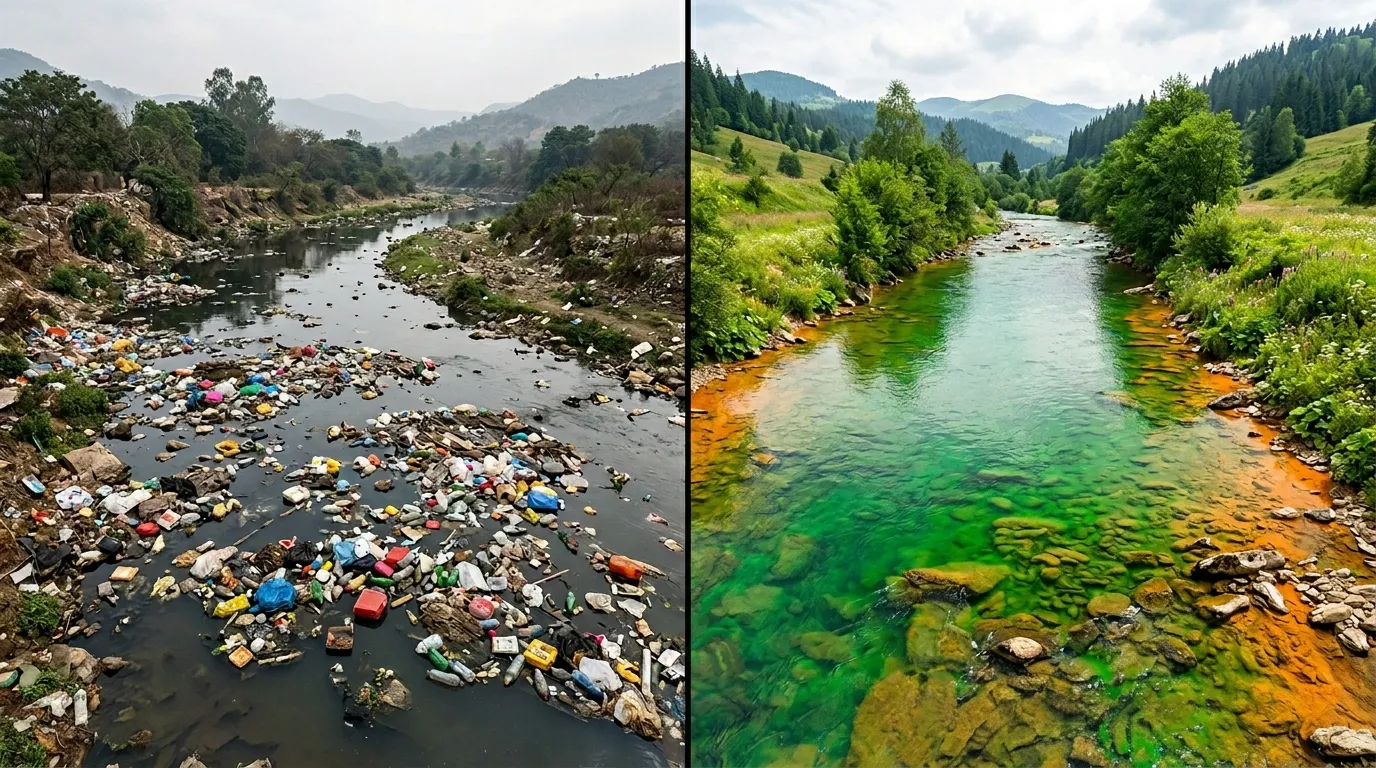
Before we break down the specific types of pollution, we must dismantle a common myth: the idea that water clarity equals water quality.
Historically, humans evolved to trust clear water. In nature, a fast-flowing, transparent mountain stream is usually safe to drink. However, in an industrialized world, clarity can be a deadly illusion. Highly toxic industrial acids or dissolved heavy metals do not always change the color or transparency of water. Conversely, a river carrying a heavy load of natural silt from a monsoon downpour might look like thick brown chocolate milk, yet remain perfectly healthy for the native fish that evolved in those conditions.
Understanding this distinction is the first step in becoming a true guardian of our rivers.
Muddy, brown water is a sign of a heavily polluted river.
Click to revealSilt and sediment are a natural part of a river's life cycle. Many native fish evolved in turbid, monsoon-fed waters. Muddy water can simply mean the river is carrying natural sediment.
Click to flip backWhen we talk about the pollution we can see, we are largely talking about solid waste and untreated domestic sewage. These are the aesthetic nightmares that spark public outrage.
Macroscopic Plastics
Plastic bags, wrappers, and discarded clothing physically choke the river. They block sunlight, suffocate wildlife, and create stagnant pools where disease-carrying mosquitoes breed.
Raw Sewage
Discharged directly from city nallas, this untreated human waste introduces massive amounts of organic matter. As bacteria break it down, they consume the water’s oxygen.
Unnatural Sediment
Reckless sand mining and construction debris dumping alter the river’s flow, bury fish breeding grounds under thick mud, and permanently change the riverbed.
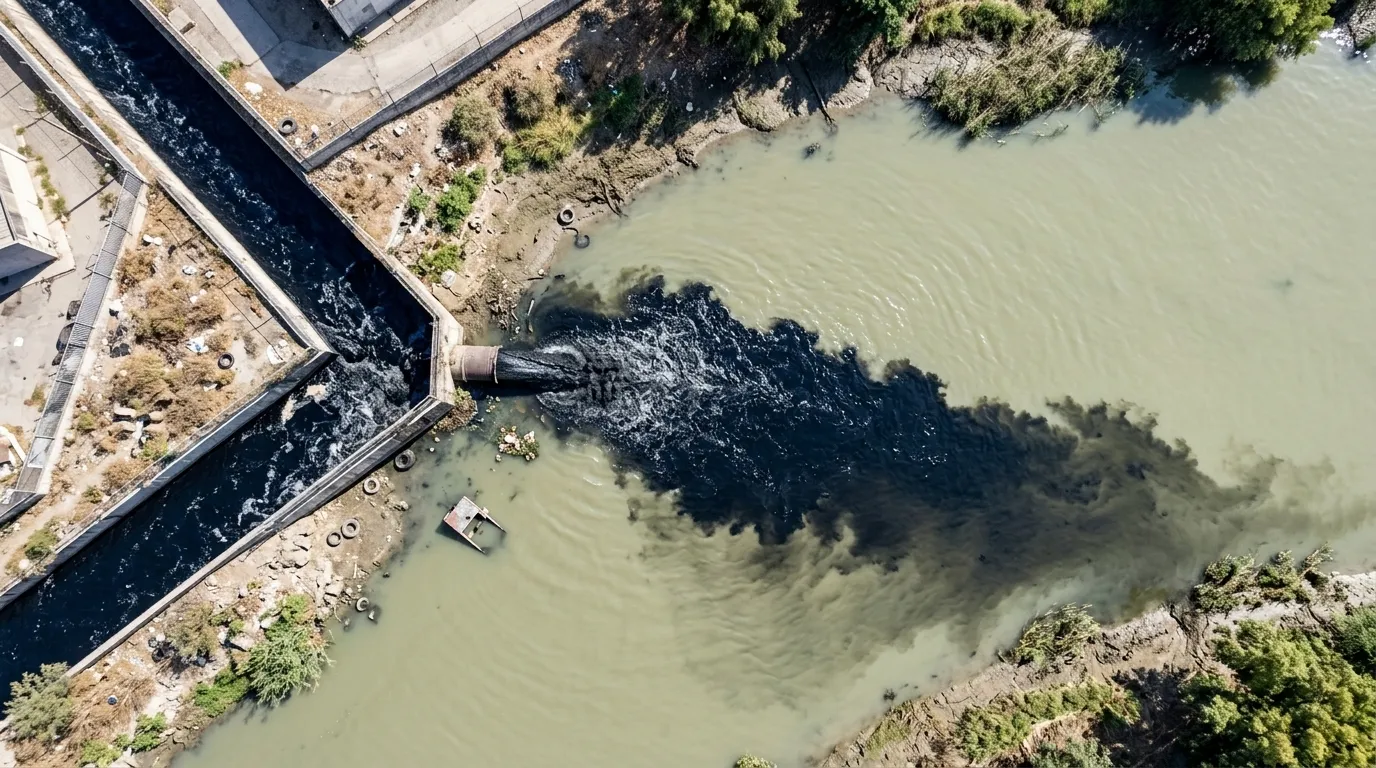
If the visible pollutants are the blunt instruments, the invisible pollutants are the slow-acting poisons. These are the threats that require water testing kits and scientific analysis to detect.
Industrial Effluents: Factories manufacturing textiles, leather, paper, and chemicals often produce liquid waste containing heavy metals (like lead and mercury), harsh acids, and synthetic dyes. When dumped untreated, these chemicals dissolve completely. They do not just kill fish; they bioaccumulate. This means the toxins build up in the bodies of small fish, which are eaten by larger fish, eventually making their way onto our dinner plates.
Agricultural Runoff: The green revolution brought us chemical fertilizers and pesticides, which have saved millions from starvation. However, when it rains, the excess nitrogen and phosphorus wash off the fields and into rivers. This invisible nutrient dump causes eutrophication—a massive, explosive overgrowth of algae. The algae form a thick green blanket over the water, blocking sunlight and ultimately starving the river of oxygen when they die and decompose.
Microbial Pathogens: Invisible to the naked eye, billions of harmful bacteria, viruses, and parasites thrive in water contaminated by human and animal waste. These pathogens turn rivers into vectors for diseases like cholera, typhoid, and dysentery, making the water incredibly dangerous for communities downstream who rely on it for bathing or drinking.
Thermal Pollution: Often forgotten, heat is a powerful pollutant. Power plants and large factories pull cold water from rivers to cool their machinery, then pump the heated water back out. This sudden spike in water temperature disrupts the reproductive cycles of aquatic life and drastically reduces the amount of oxygen the water can hold. A warm river is, quite literally, a breathless river.
A river is a complex, living system. When we look at a polluted waterway, we must train our minds to see both the floating plastic bottle and the invisible dissolved nitrate; both the dark sewage plume and the microscopic bacteria swimming within it.
Fixing a river requires us to address the whole picture. We cannot simply skim the garbage off the surface and declare the water healed. True restoration demands that we trace every pipe, monitor every farm, and test every drop for the invisible threats that quietly break a river’s spirit. Only when we understand the full spectrum of pollution can we begin the hard, necessary work of bringing our rivers back to life.
🔗 This builds on concepts from: Why Our Rivers Are Polluted? - Article 4: The Journey of a Water Drop.
🔗 Coming next in the series: Article 6: Sewage: What Really Happens After We Flush?, where we will dive deep into the biggest contributor to river pollution.
🔗 Read more in the Tech Tools for River Guardians series: Article 2: Affordable Sensors, to learn how citizen scientists are using modern tech to detect the invisible chemicals discussed today.
