Rivers are the lifelines of human civilization. If you read the first two parts of our “Why Our Rivers Are Polluted?” series, you already know the foundations of our journey. In Article 1, we set our intention to understand river health from a simple, beginner-friendly perspective, mapping out our path from awareness to action. In Article 2, we explored the science of what a river really is—a vibrant, living system of connected waters, forests, and soil, not just a static pipe carrying water to the ocean.
Today, we look at the human side of the story. Why should we care if our rivers are clean? The answer goes far beyond environmental science. In India, clean rivers are absolutely essential to our daily physical survival and are the very heart of our cultural and spiritual identity—our Dharma. Let us explore how rivers touch almost every aspect of who we are.
When you turn on the tap in your kitchen to pour a glass of water, there is a very good chance that water began its journey in a flowing river. We often forget the invisible thread connecting our modern homes to the nearest riverbank, but our daily survival depends entirely on the health of these waterways.
Drinking Water
Many major Indian cities rely heavily on rivers to supply their growing populations. When rivers become polluted, treatment plants must use harsh chemicals and spend significantly more money to make the water safe. In extreme cases, heavily polluted water leads to severe urban water shortages.
Agriculture & Food
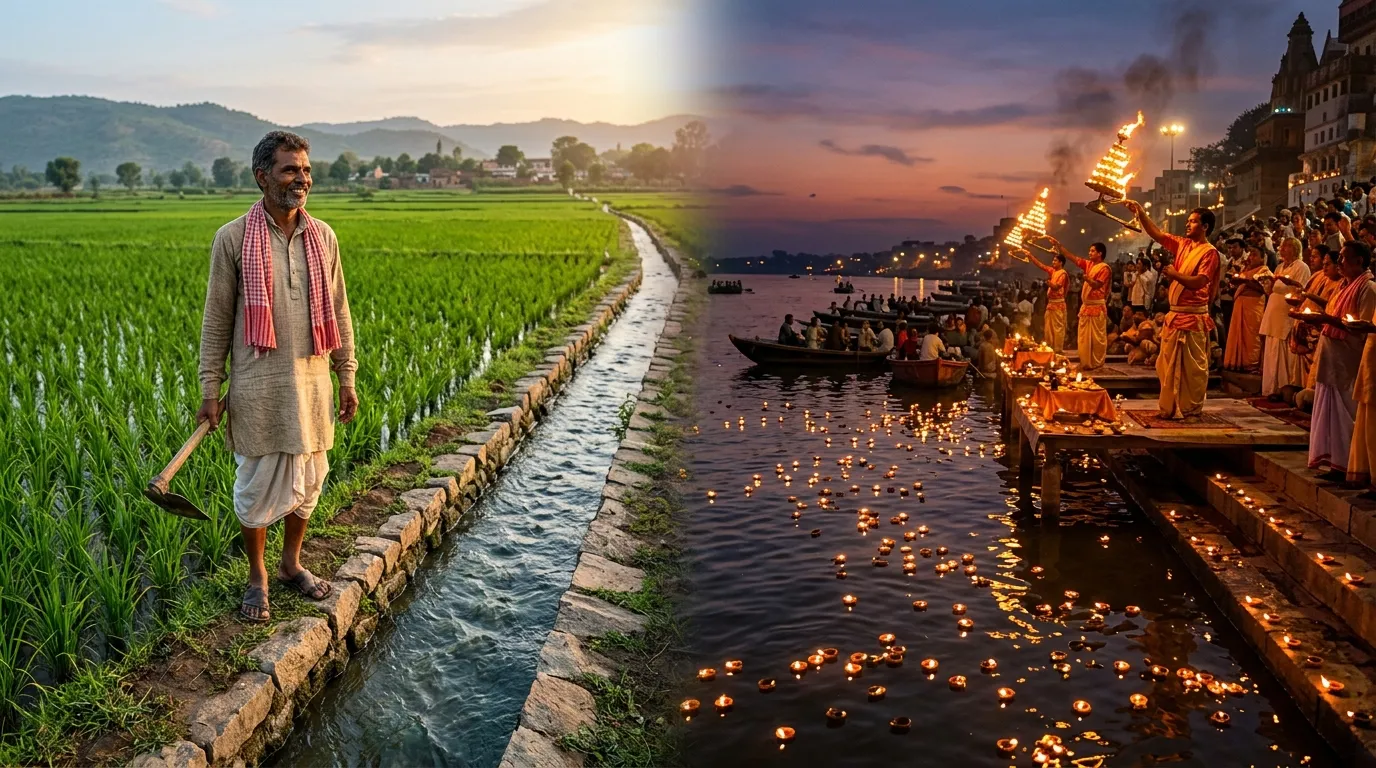
Indian agriculture relies on massive river networks. Farmers use this water to irrigate crops and recharge groundwater. If a river carries toxic chemicals, those substances can accumulate in the soil, enter the crops, and eventually find their way into our food chain.
Livelihoods & Jobs
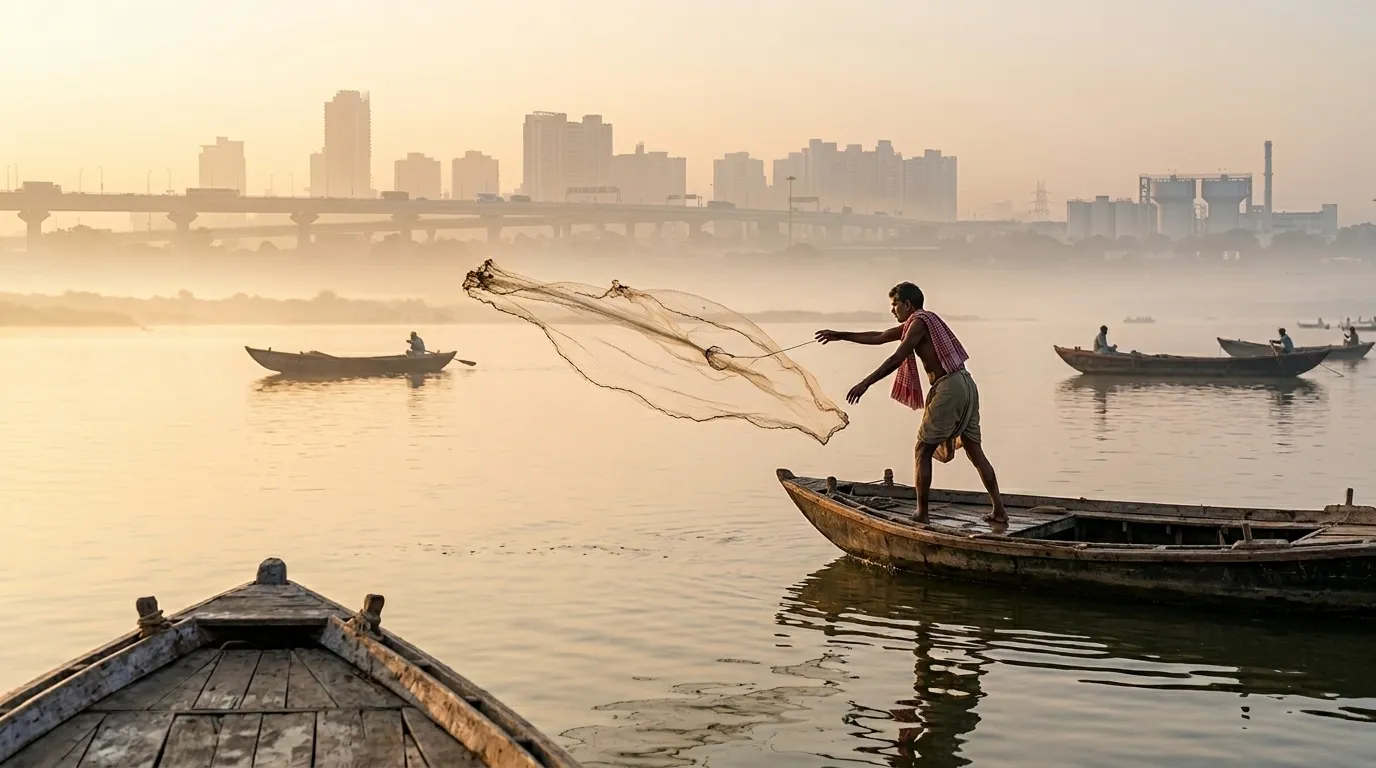
Rivers provide millions of jobs. Fishermen depend entirely on healthy, oxygen-rich water for fish populations. Boatmen, tour guides, and small businesses thrive along lively riverfronts. When a river is choked with waste, the local economy suffers deeply.
A clean river is an engine for prosperity, health, and well-being. A polluted river, however, becomes a source of disease and economic hardship.
Common Belief
The Ganga is so holy that it can never truly be polluted.
Click to reveal
Reality
The spiritual reverence for the river is powerful, but the physical water is still vulnerable to pollution from sewage, chemicals, and waste.
While the practical benefits of rivers are massive, in India, our connection to them goes much deeper into the realm of the sacred. Here, a river is rarely just a geographical feature; it is a living deity, a mother (Mata), and a powerful purifier. We do not just use rivers; we worship them.
From the icy peaks of the Himalayas to the warm plains of the south, rivers like the Ganga, Yamuna, Narmada, Godavari, and Kaveri form the spiritual geography of the country. For thousands of years, our ancestors have settled on their banks, building magnificent temples, bathing ghats, and peaceful ashrams. Many of India’s oldest and most vibrant cities—like Varanasi, Haridwar, Prayagraj, and Madurai—were built precisely because of the holy rivers that flow through them.
Rivers are central to our most sacred rituals. Millions of people gather at the banks of the Ganga and Yamuna for the Kumbh Mela, creating the largest peaceful human gatherings on Earth. During festivals like Chhath Puja, devotees stand waist-deep in river waters to offer prayers to the Sun God. A dip in a holy river is deeply believed to wash away sins and purify the soul. From the moment a child is born to the final scattering of ashes after death, the river acts as a silent, loving witness to the entire human experience.
Because of this profound spiritual connection, the concept of Dharma (duty or righteous living) is intimately tied to river conservation. Ancient scriptures speak of the purity of water and the sin of contaminating it. Treating a river with respect is considered a profound spiritual duty. When we understand rivers as extensions of the divine, keeping them clean becomes a form of worship in itself.
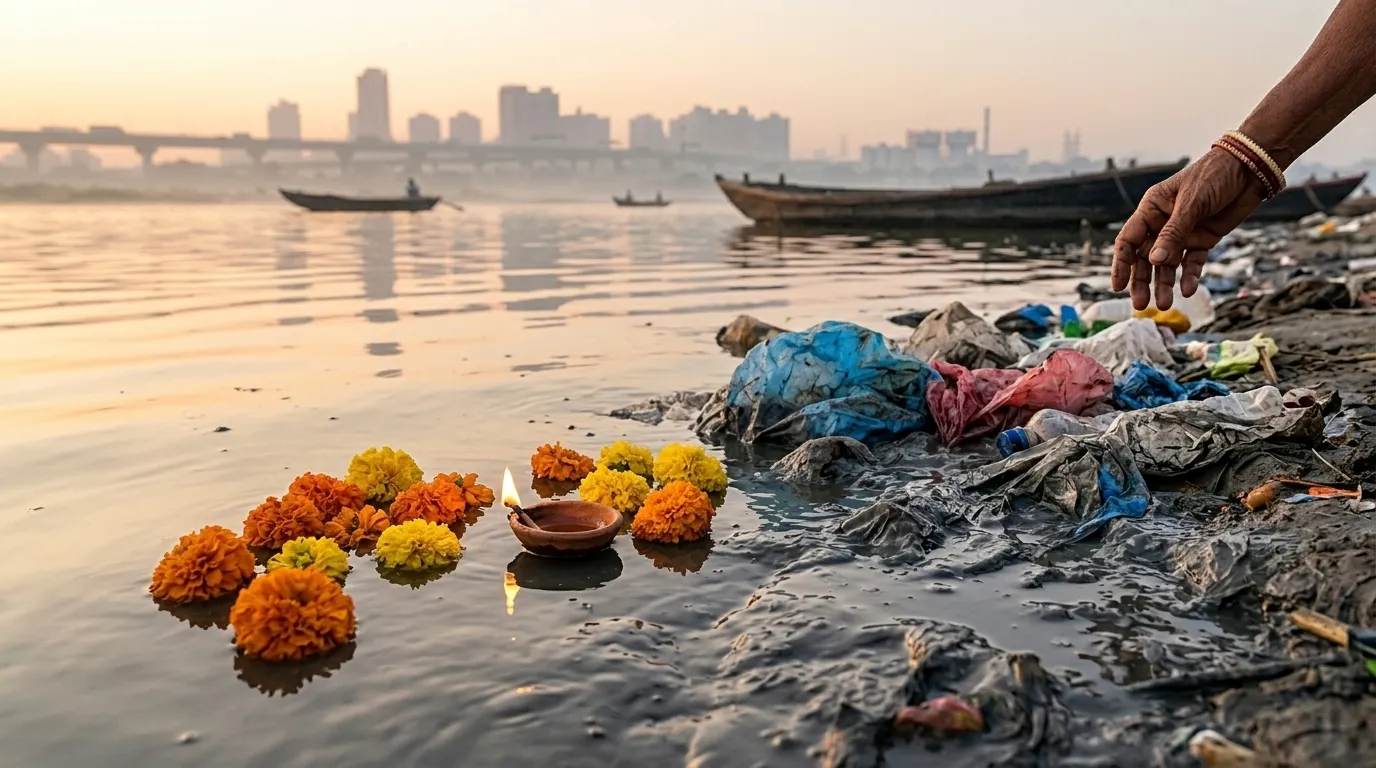
Despite this beautiful reverence, we face a heartbreaking contradiction today. The very rivers we call “Mother” and worship daily are often the most polluted waterways in our cities.
How does this happen? Often, it is a mix of overwhelming population growth, a lack of modern infrastructure, and a dangerous misunderstanding of what a natural river can handle. We offer flowers, milk, and camphor with deep devotion, but we often leave them wrapped in synthetic plastic bags that choke the riverbed. We build grand, beautiful temples on the banks, yet we allow untreated city sewage to flow directly into the exact same waters where devotees bathe.
We have mistakenly separated our spiritual reverence from our daily civic responsibility. We sometimes believe the river is so holy and powerful that it can magically absorb all our modern waste without being harmed. But a river, as we learned in Article 2, is a physical, ecological system. It has strict natural limits. When those limits are crossed, the water becomes toxic, completely regardless of its sacred status.
Reconciling our ancient faith with modern reality is the greatest challenge of river conservation today. True Dharma means adapting our rituals so they do not harm nature. It means ensuring that the physical water is as pure and vibrant as the spiritual essence we believe it holds.
We now understand what a river is and why its health is absolutely critical to both our daily survival and our cultural soul. But if we depend on them so much, and revere them so deeply, how exactly do they get so heavily polluted?
In our next piece, Article 4: “How a Clean River Slowly Turns Dirty”, we will follow the fascinating, sometimes tragic journey of a single water drop. We will see exactly how a pristine mountain stream slowly transforms as it travels through farms, factories, and bustling cities.
Until then, take a moment to test your understanding of our deep, unbreakable connection to our rivers.
Quick Knowledge Check
0/4 answered
You turn on the tap in your city apartment to drink a glass of water. What invisible journey did that water likely take?