15-When the Ganga Rests in Shiva’s Locks – A Mahashivratri Reflection
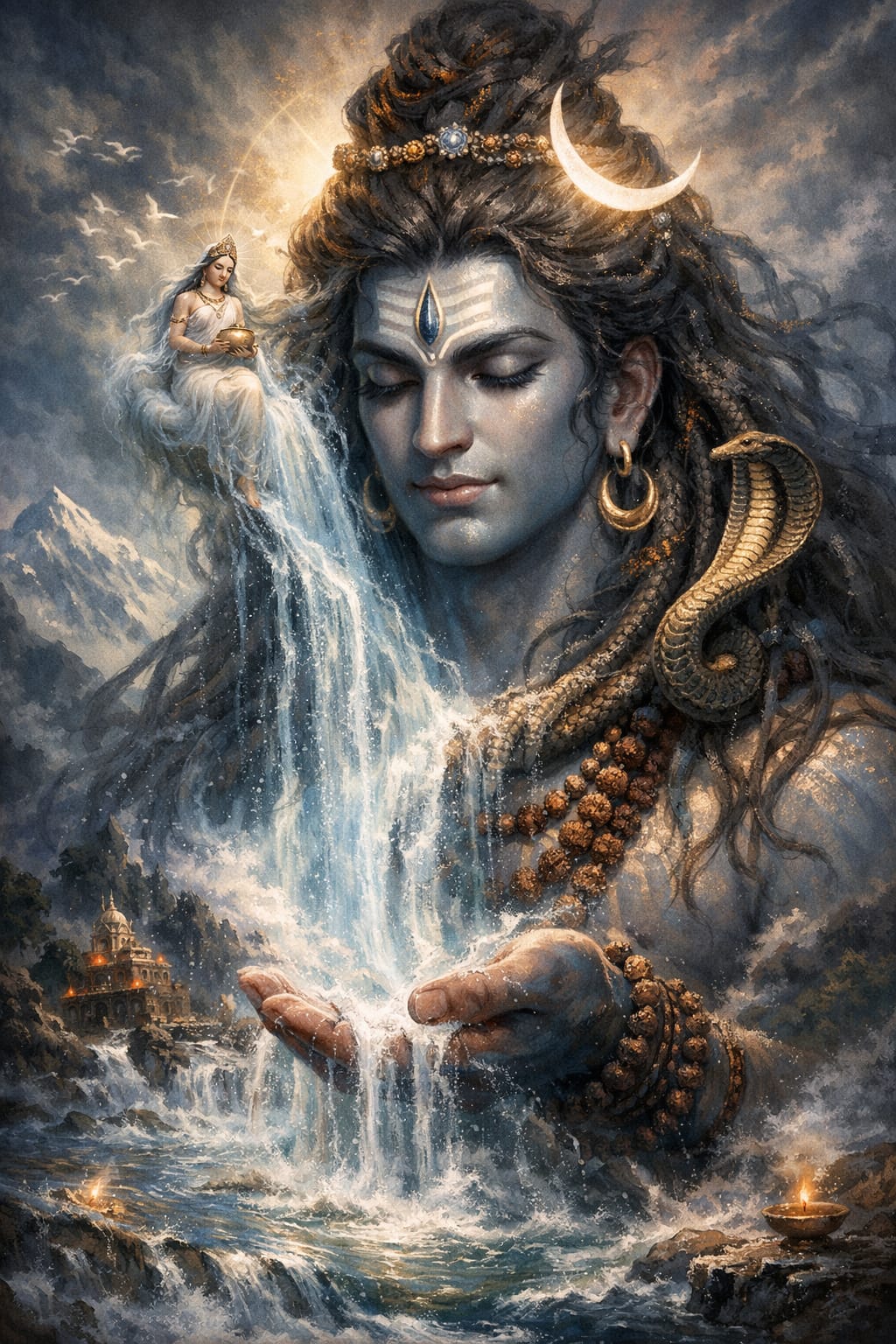
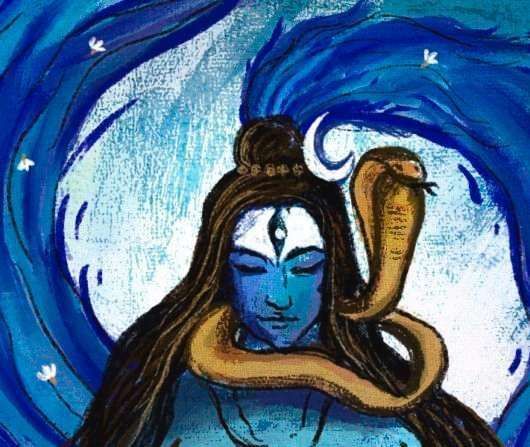
Good morning friends. Today is Mahashivratri, a night when devotion feels deeper and silence feels louder. On this sacred day, it feels only right to pause and listen to one of the most powerful hymns ever composed in praise of Lord Shiva — the Shiv Tandav Stotram. Its rhythm is fierce, its language majestic, and yet within its intensity lies something profoundly tender. Hidden inside its thunderous beats is a gentle story — the story of Maa Ganga resting in Shiva’s matted locks. The Shiv Tandav Stotram, traditionally attributed to Ravana, is not merely poetry. It is movement. It is sound. It is devotion wrapped in power. Each syllable feels like a drumbeat, echoing the cosmic dance of Shiva. But amidst this powerful imagery of fire, serpents, and celestial energy, we find a verse that speaks of flowing water — of the sacred Ganga. The very first verse begins: जटाटवीगलज्जलप्रवाहपावितस्थले गलेऽवलम्ब्य लम्बितां भुजङ्गतुङ्गमालिकाम्। डमड्डमड्डमड्डमन्निनादवड्डमर्वयं चकार चण्डताण्डवं तनोतु नः शिवः शिवम्॥ Here, the opening line paints a breathtaking image. “Jatāṭavī-gala-jjala-pravāha-pāvita-sthale” — it describes the sacred place purified by the streams of water flowing from Shiva’s tangled locks. That water is none other than Ganga. She does not fall violently. She flows, sanctifying everything around her. The image tells us that before Ganga touched the earth, she first rested in Shiva’s hair. It was he who bore her force, softened her descent, and allowed her to flow gently upon the world. Another verse deepens this imagery: जटाकटाहसंभ्रमभ्रमन्निलिम्पनिर्झरी विलोलवीचिवल्लरी विराजमानमूर्धनि। धगद्धगद्धगज्ज्वलल्ललाटपट्टपावके किशोरचन्द्रशेखरे रतिः प्रतिक्षणं मम॥ In this verse, “Nilimpa-nirjhari” refers to the celestial river — Ganga — swirling playfully in the whirl of Shiva’s matted hair. The words describe her waves moving like delicate creepers, shining brilliantly upon his head. Even as fire blazes upon his forehead and the crescent moon rests upon him, Ganga flows there peacefully. The contrast is striking: fire and water coexisting in balance. Destruction and purity resting together. What does this tell us? When Ganga was descending from the heavens, her force was said to be so powerful that it could have shattered the earth. It was Shiva who chose to receive her. He did not command her. He did not control her. He gave her space. He allowed her to flow through his locks until her intensity became gentler. This is not dominance. This is protection. In the Shiv Tandav Stotram, Ganga is not described as subordinate. She is radiant. She is celestial. She is movement itself. Shiva does not stand above her — he carries her. He honours her. He offers his own head as her resting place. There is a deep symbolism here. The highest place on Shiva’s body is given to Ganga. That is respect. That is reverence. On Mahashivratri, when we speak of Shiva’s power, we must also remember his tenderness. The same Lord who performs the fierce Tandav also ensures that the sacred river reaches the earth without harm. The same cosmic dancer becomes the gentle bearer of Ganga. Perhaps that is today’s quiet lesson. Strength is not loudness. Power is not force. True greatness is the ability to protect what is sacred. If Shiva, the ascetic of Kailash, chose to honour Ganga by holding her above all else, what does that ask of us? If he cared enough to soften her descent, should we not care enough to protect her flow? Tonight, as bells ring and chants echo, remember the image from the Shiv Tandav Stotram — Ganga shining in Shiva’s locks, flowing yet calm, powerful yet protected. It is a reminder that reverence is not only in prayer. It is also in preservation. Har Har Mahadev.
सुप्रभात दोस्तों। आज महाशिवरात्रि है — वह रात्रि जब भक्ति गहरी हो जाती है और मन अपने आप भीतर की ओर चला जाता है। ऐसे पवित्र दिन पर भगवान शिव की स्तुति में रचित शिव तांडव स्तोत्र का स्मरण स्वाभाविक है। इसकी ध्वनि में शक्ति है, शब्दों में अग्नि है, और लय में अद्भुत ऊर्जा है। लेकिन इस उग्रता के बीच एक अत्यंत कोमल चित्र भी छिपा है — माँ गंगा का, जो शिव की जटाओं में विराजती हैं। शिव तांडव स्तोत्र केवल काव्य नहीं है। यह नृत्य है, यह स्पंदन है, यह शिव के ब्रह्मांडीय स्वरूप का अनुभव है। हर शब्द डमरू की ध्वनि जैसा लगता है। परंतु इसी स्तोत्र के प्रारंभ में हमें गंगा का अत्यंत सुंदर वर्णन मिलता है। पहला श्लोक कहता है — जटाटवीगलज्जलप्रवाहपावितस्थले गलेऽवलम्ब्य लम्बितां भुजङ्गतुङ्गमालिकाम्। डमड्डमड्डमड्डमन्निनादवड्डमर्वयं चकार चण्डताण्डवं तनोतु नः शिवः शिवम्॥ “जटाटवीगलज्जलप्रवाहपावितस्थले” — यह पंक्ति उस स्थान का वर्णन करती है जो शिव की जटाओं से बहते जल से पवित्र हो रहा है। वह जल कोई साधारण जल नहीं, वह स्वयं माँ गंगा हैं। वह शिव की जटाओं से प्रवाहित होकर संसार को पवित्र कर रही हैं। यहाँ एक अद्भुत चित्र उभरता है — गंगा का वेग शिव की जटाओं में समा जाता है, और वहाँ से वह शांत होकर पृथ्वी पर उतरती हैं। एक और श्लोक में यह चित्र और स्पष्ट होता है — जटाकटाहसंभ्रमभ्रमन्निलिम्पनिर्झरी विलोलवीचिवल्लरी विराजमानमूर्धनि। धगद्धगद्धगज्ज्वलल्ललाटपट्टपावके किशोरचन्द्रशेखरे रतिः प्रतिक्षणं मम॥ यहाँ “निलिम्पनिर्झरी” शब्द गंगा के लिए प्रयुक्त हुआ है — स्वर्ग से प्रवाहित होने वाली दिव्य नदी। वह शिव की जटाओं में घूमती हुई, लहराती हुई, उनके मस्तक पर शोभायमान है। एक ओर उनके ललाट पर अग्नि प्रज्वलित है, दूसरी ओर चंद्रमा विराजमान है, और उसी के साथ गंगा भी प्रवाहित हो रही हैं। अग्नि और जल का यह संतुलन शिव के स्वरूप की गहराई को दर्शाता है। जब गंगा स्वर्ग से पृथ्वी पर उतरने वाली थीं, तब उनका वेग इतना प्रचंड था कि पृथ्वी उसे सहन नहीं कर सकती थी। तब शिव ने उन्हें अपनी जटाओं में धारण किया। उन्होंने गंगा को रोका नहीं, बाँधा नहीं — बल्कि उनके वेग को अपने भीतर समाहित किया। यह नियंत्रण नहीं, संरक्षण है। यह अधिकार नहीं, सम्मान है। शिव ने अपने मस्तक पर गंगा को स्थान दिया। यह केवल अलंकरण नहीं है। यह संदेश है कि जो पवित्र है, उसे सर्वोच्च स्थान देना चाहिए। गंगा शिव के सिर पर विराजती हैं — यह उनके प्रति शिव का सम्मान है, उनकी करुणा है। महाशिवरात्रि पर जब हम शिव की महिमा का गुणगान करते हैं, तो हमें यह भी याद रखना चाहिए कि वही महादेव जो तांडव करते हैं, वही गंगा को धारण भी करते हैं। वही जो संहारक हैं, वही संरक्षक भी हैं। आज की सीख शायद यही है — शक्ति का अर्थ कठोरता नहीं है। सच्ची महानता उस में है जो पवित्र को सुरक्षित रख सके। यदि शिव ने गंगा को अपने सिर पर स्थान दिया, तो क्या हमें भी उन्हें सम्मान नहीं देना चाहिए? यदि उन्होंने उनके वेग को संभाला, तो क्या हमें उनके प्रवाह को स्वच्छ रखने का प्रयास नहीं करना चाहिए? आज जब “हर हर महादेव” की ध्वनि गूँज रही है, तब उस चित्र को स्मरण करें — शिव की जटाओं में शांत होकर बहती हुई माँ गंगा। यह केवल भक्ति का प्रतीक नहीं, बल्कि संरक्षण का संदेश भी है। हर हर महादेव।